
📌 TL;DR
- Inflation erodes purchasing power over time.
- Cash is a high-risk strategy as its real value declines.
- Real assets (stocks, real estate, commodities) historically outperform.
💡 Introduction
Understanding how inflation affects your investments is essential for navigating today’s economic environment.
While inflation is a dominant force in the global market, its subtle erosion of wealth is often underestimated. As prices rise, the value of currency declines—meaning your “nominal” savings may remain the same while your actual purchasing power vanishes.
This highlights how inflation affects your investments in real terms, not just on paper.
📉 1. Why Inflation Reduces Purchasing Power
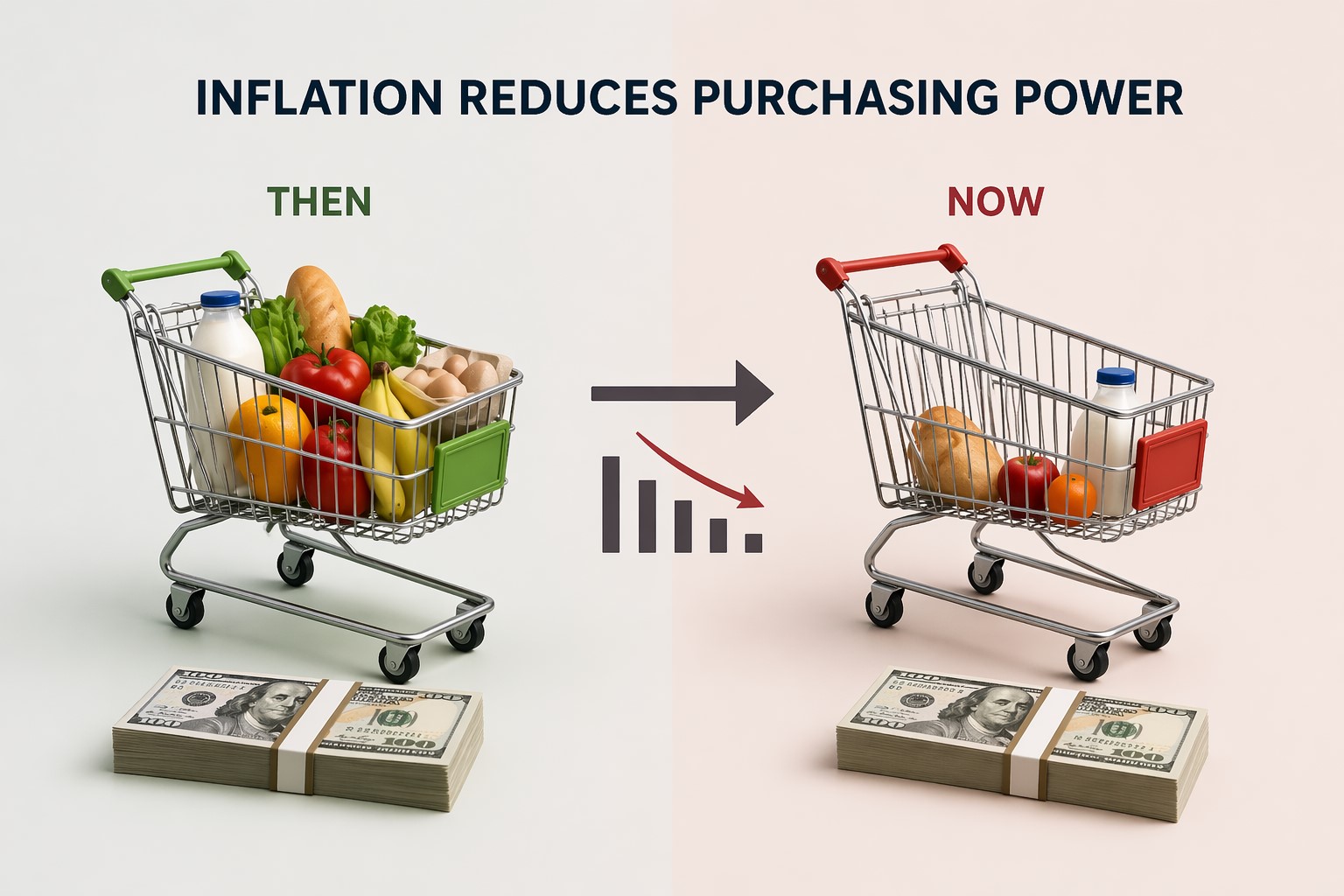
Inflation simply means that the cost of goods and services increases over time, as explained in this IMF guide to inflation.
For example, what $100 could buy a few years ago may now require $110 or more.
👉 This is why inflation directly erodes purchasing power.
For investors, this creates a significant hurdle:
- Cash holdings lose their real-world value.
- Fixed-income returns (like bond interest) may fail to keep pace with rising costs.
- Simple saving is no longer enough to preserve long-term wealth.
This is why understanding how inflation affects your investments is essential for long-term financial planning.
💸 2. Why Holding Cash Becomes Risky
Many people believe holding cash is safe.
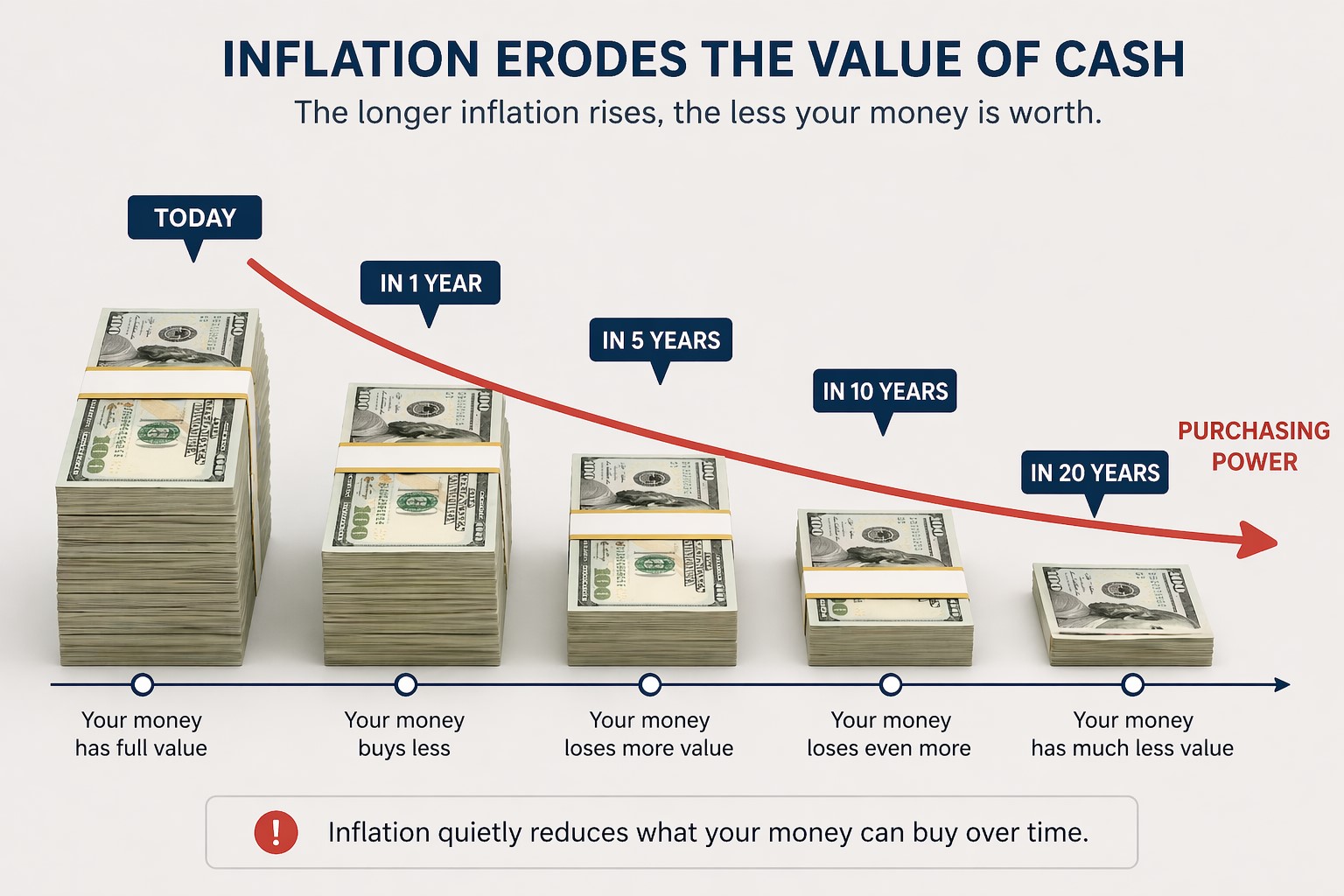
However, during inflationary periods, cash can actually become one of the riskiest assets.
Why?
Because:
- Inflation reduces real returns
- Interest rates may not keep up with rising prices
- The real value of savings declines over time
👉 In simple terms: Cash is losing value while prices are rising.
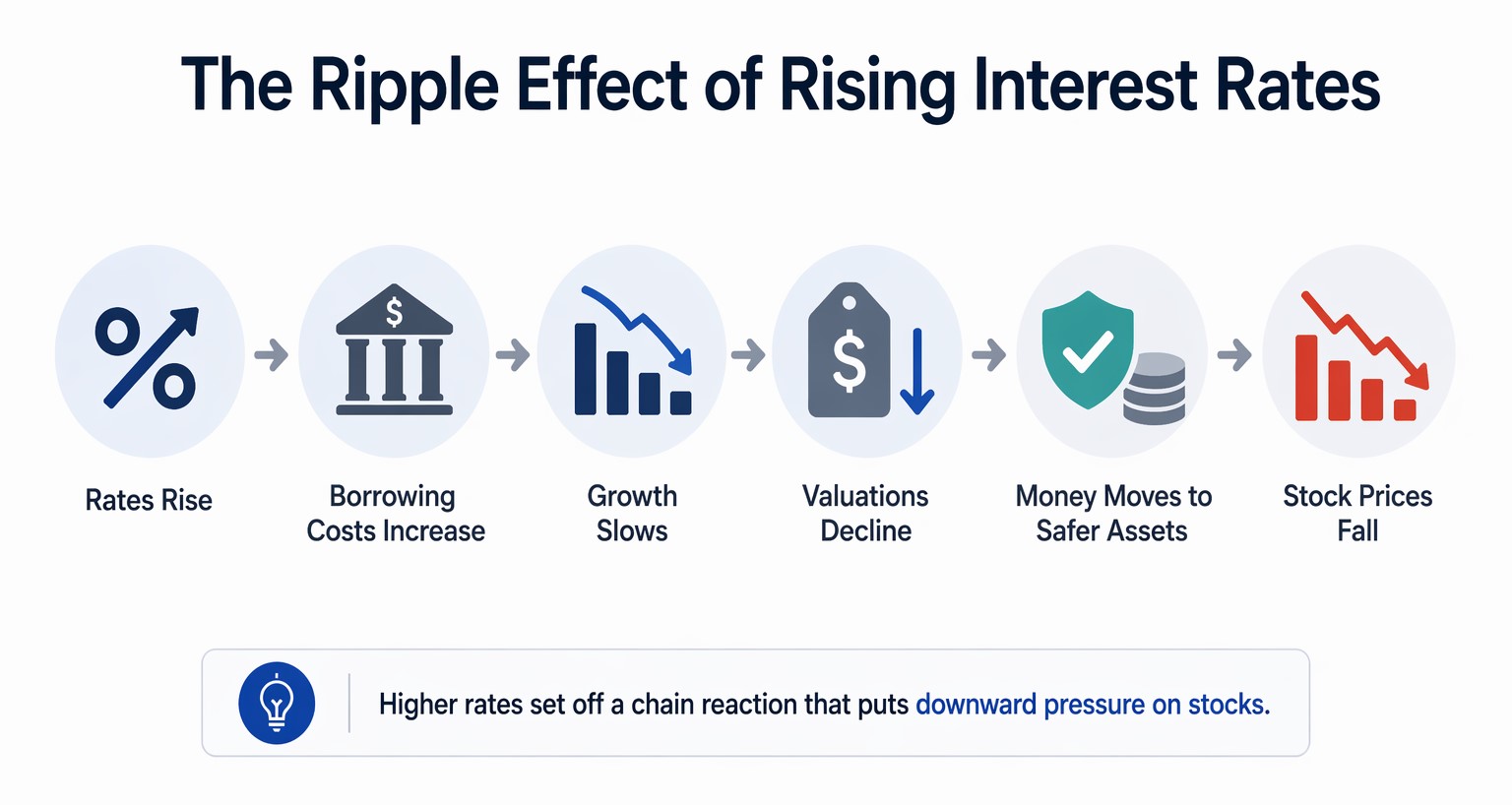
This is closely related to how interest rates impact markets and central bank policy, as outlined by the Federal Reserve.
For a deeper explanation, you can read: Why Do Stocks Fall When Interest Rates Rise?
📊 3. How Inflation Changes Investment Strategy
Inflation forces investors to rethink their strategies.
Instead of focusing only on safety, investors need to consider real returns — returns after inflation.
During inflationary periods:
- Low-yield assets underperform
- Growth expectations shift
- Capital flows into assets that can keep up with inflation
👉 The key is not just to protect money, but to maintain its purchasing power.
Ultimately, how inflation affects your investments depends on how well your portfolio can adapt to rising prices.
🏠 4. Assets That Perform Well During Inflation
Not all assets react the same way to inflation.
Some tend to perform better because they can adjust to rising prices.
Examples include:
- Stocks (companies that can raise prices)
- Real estate (property values and rents increase)
- Commodities (oil, gold, raw materials)
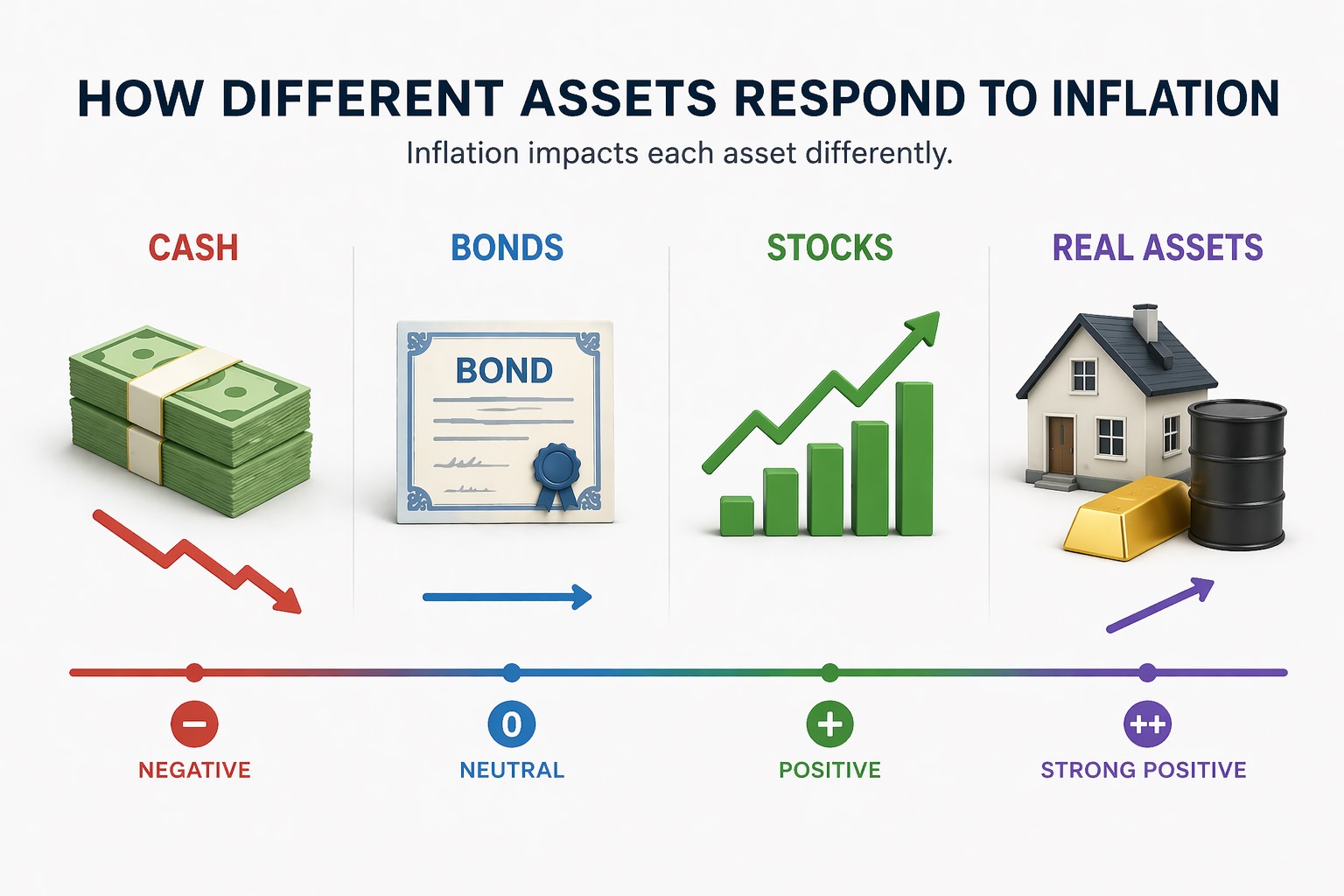
👉 These are often referred to as real assets
They have intrinsic value and tend to move with inflation.
This is a key example of how inflation affects your investments, as real assets tend to perform better in rising price environments.
⚠️ 5. The Hidden Risk: Not Investing
One of the biggest risks during inflation is not investing at all.
If money stays in cash:
- Its real value declines every year
- Opportunities for growth are missed
👉 Over time, this can significantly reduce wealth.
This is why investors need to take a proactive approach when inflation rises.
📌 Final Thoughts
So, how does inflation affect your investments?
The answer is simple:
👉 Inflation reduces purchasing power, weakens cash value, and shifts investment opportunities.
To navigate inflation successfully:
- Focus on real returns
- Avoid excessive cash holdings
- Invest in assets that can grow with inflation
Understanding how inflation affects your investments can help you make smarter decisions and protect your long-term wealth.
❓ FAQ
Q1. How does inflation affect your investments?
Inflation reduces the purchasing power of money over time.
This means that even if your investments grow in nominal terms, their real value may decline if returns do not keep up with inflation.
Q2. Why is holding cash risky during inflation?
Holding cash is risky because inflation erodes its real value.
As prices rise, the same amount of money can buy less, resulting in negative real returns.
Q3. What types of investments perform well during inflation?
Assets such as stocks, real estate, and commodities tend to perform better during inflation.
These are often called real assets because they can adjust to rising prices.
Q4. Can bonds protect against inflation?
Traditional bonds may struggle during inflation because their fixed interest payments lose value.
However, inflation-protected securities (like TIPS) can help mitigate this risk.
Q5. Why is not investing a risk during inflation?
Not investing means your money stays in cash, which loses value over time due to inflation.
This can significantly reduce long-term wealth and purchasing power.
Q6. How should investors adjust their strategy during inflation?
Investors should focus on real returns, reduce excessive cash holdings, and allocate assets to inflation-resistant investments like stocks or real assets.
🔍 Related Articles
To better understand this topic, it helps to explore related concepts such as:
📊 Market Fundamentals
- Why Do Stocks Fall When Interest Rates Rise?
- 7 Best Investments During High Interest Rates (2026 Guide)
📈 Trading Basics
⚠️ Disclaimer: This article is for educational purposes only and should not be considered financial advice. Please conduct your own research before making any investment decisions.