
📌 TL;DR
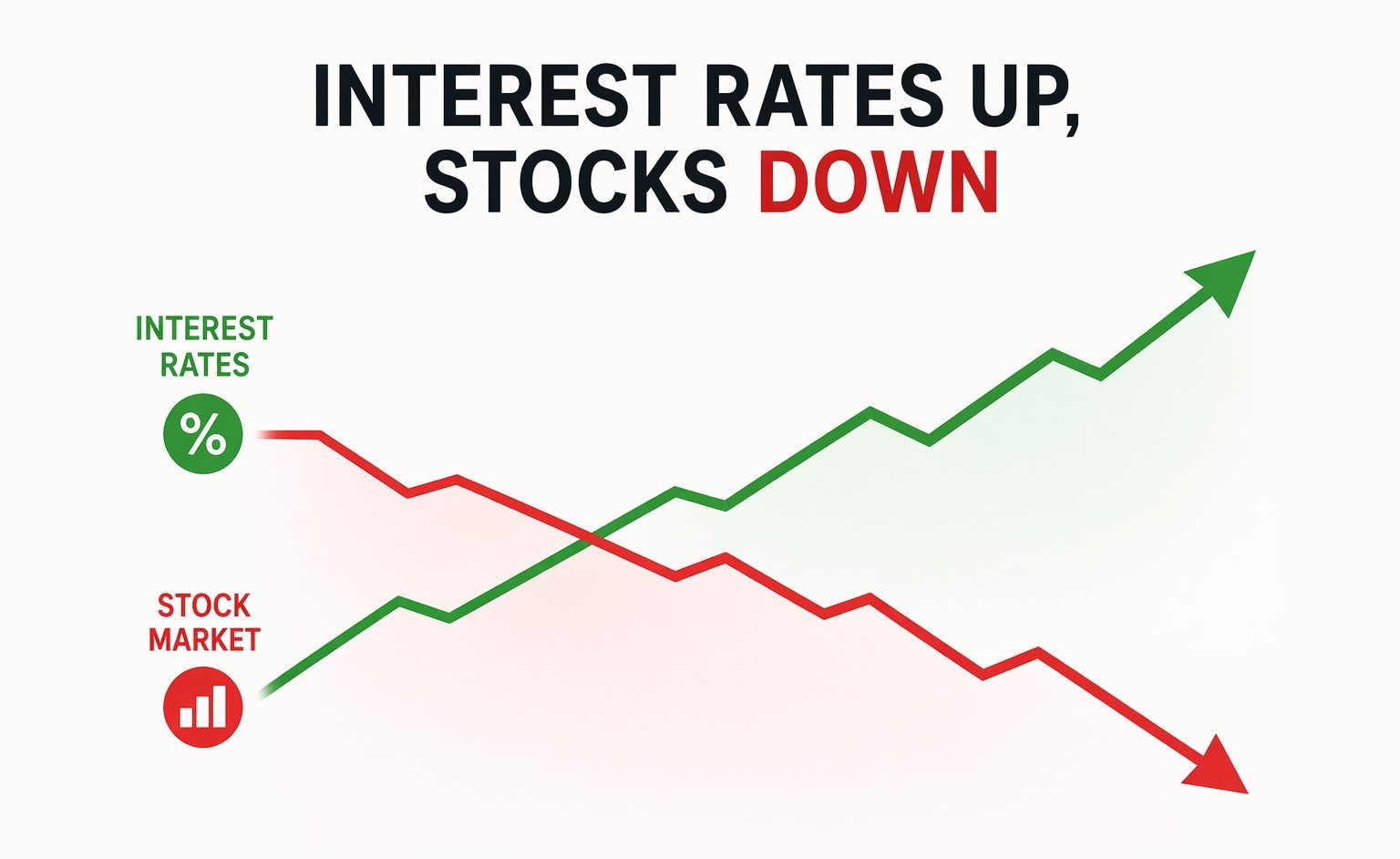
👉 The Bottom Line: Stock prices historically fall during rate hikes.
- Rising interest rates increase the cost of capital.
- Consumers and businesses tighten their belts (reduce spending).
- Stock valuations decline due to higher discount rates.
💡 Introduction
Why do stocks fall when interest rates rise? This is one of the most frequent questions investors ask when the Fed or central banks start moving rates higher.
If you’ve been investing or even casually watching the market, you’ve probably noticed a pattern:
👉 When interest rates rise, stock prices often fall.
This relationship is one of the most important concepts in investing, yet many beginners don’t fully understand why it happens.
In this guide, we’ll break down the connection between interest rates and the stock market in a simple, practical way — so you can make smarter investment decisions.
📉 1. Higher Interest Rates Increase Borrowing Costs
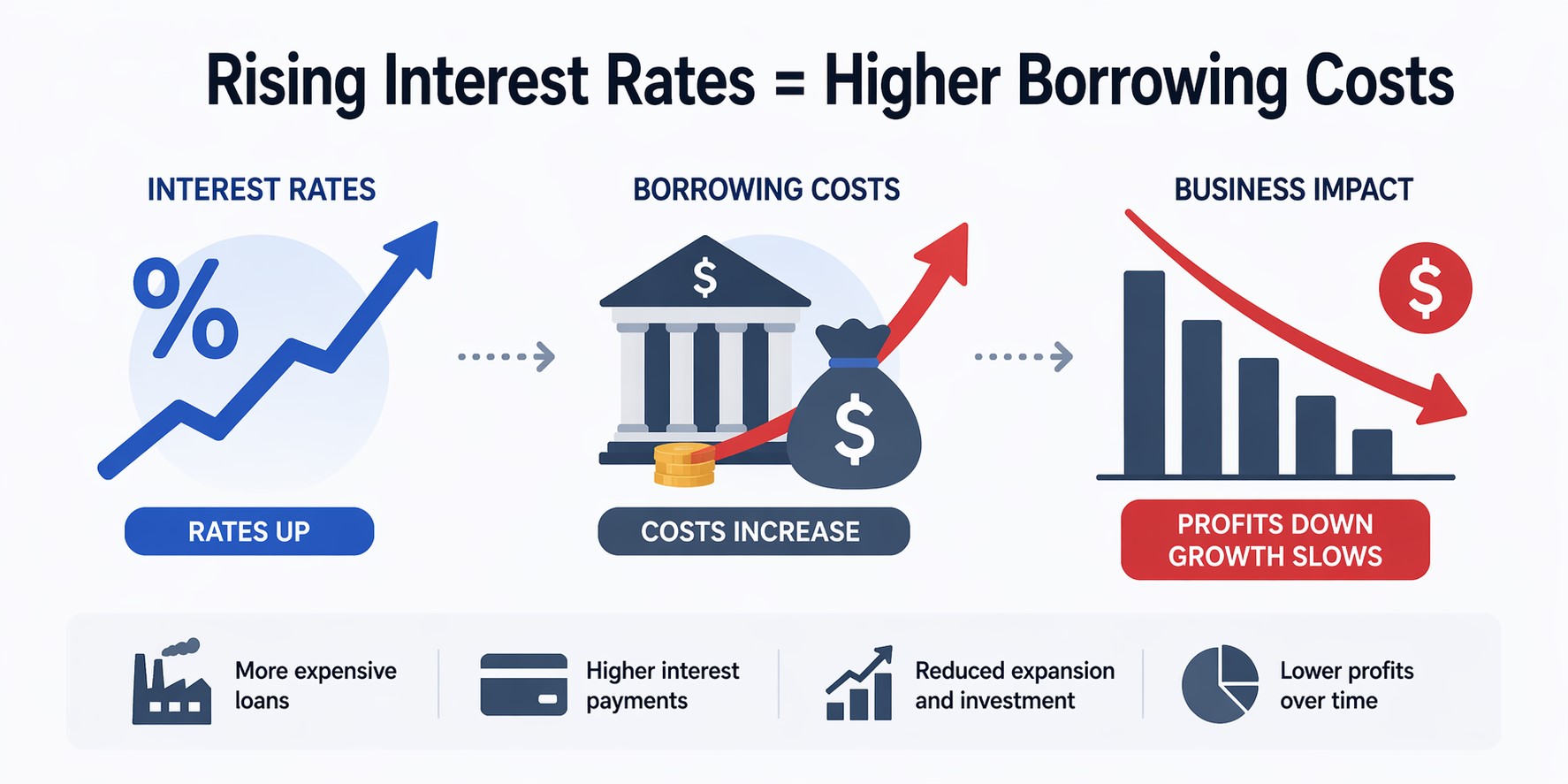
When central banks raise interest rates, borrowing money becomes more expensive across the entire economy.
This affects:
- Businesses (loans, expansion, operations)
- Consumers (mortgages, credit cards, personal loans)
For companies, higher interest rates mean:
- Increased financing costs
- Squeezed profit margins
- Slower business expansion
👉 When profits are projected to shrink, investors adjust their expectations.
👉 Consequently, stock prices tend to decline.
Many investors wonder: why do stocks fall when interest rates rise? Higher borrowing costs directly reduce profitability and slow growth.
🛒 2. Consumers Spend Less Money
Higher interest rates also impact everyday consumers.
As borrowing becomes more expensive:
- Mortgage payments increase
- Credit card interest rises
- Personal loans become harder to manage
This leads to reduced spending across the economy.
👉 Less spending = lower company revenue
👉 Lower revenue = weaker earnings
And since stock prices are closely tied to future earnings, this puts downward pressure on the market.
This is another reason why stocks fall when interest rates rise, as reduced consumer demand weakens corporate performance.
In this context, many investors ask: why do stocks fall when interest rates rise? The answer lies in reduced spending, which plays a major role in weakening corporate earnings and overall stock performance.
📊 3. Stock Valuations Decline
Here’s how higher interest rates reduce stock valuations:
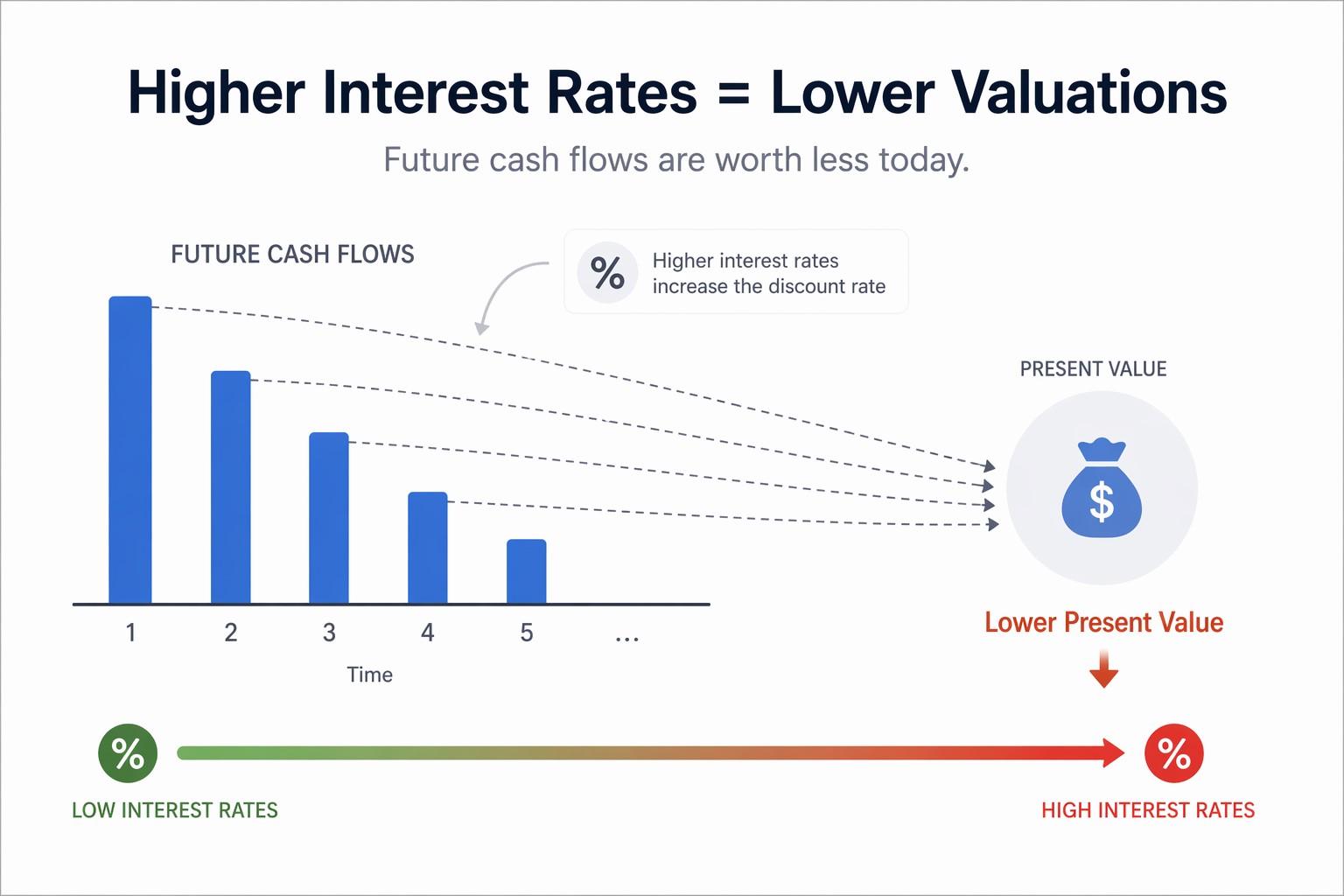
Stocks are valued based on their future earnings.
When interest rates rise, those future earnings become less valuable in today’s terms.
Why?
Because:
- Investors can now earn higher returns from safer assets (like bonds), as explained in this guide to discount rates.
- Future cash flows are discounted more heavily
👉 This results in lower valuation multiples (like P/E ratios)
Even if a company is performing well, its stock price can fall simply because:
👉 investors are no longer willing to pay a premium
This is one of the main reasons why stocks fall when interest rates rise, as higher discount rates reduce the present value of future earnings.
💧 4. Liquidity Decreases
Rising interest rates are usually part of a broader tightening cycle, often driven by central banks like the Federal Reserve.
That means:
- Less money flowing into financial markets
- Reduced access to cheap capital
- Lower investor risk appetite
👉 Liquidity decreases
👉 Market momentum slows
When there is less money in the system, asset prices — including stocks — tend to struggle.
So why do stocks fall when interest rates rise in a tightening cycle? One key reason is reduced liquidity and lower risk appetite, which weaken overall market performance.
📉 Growth Stocks vs Value Stocks
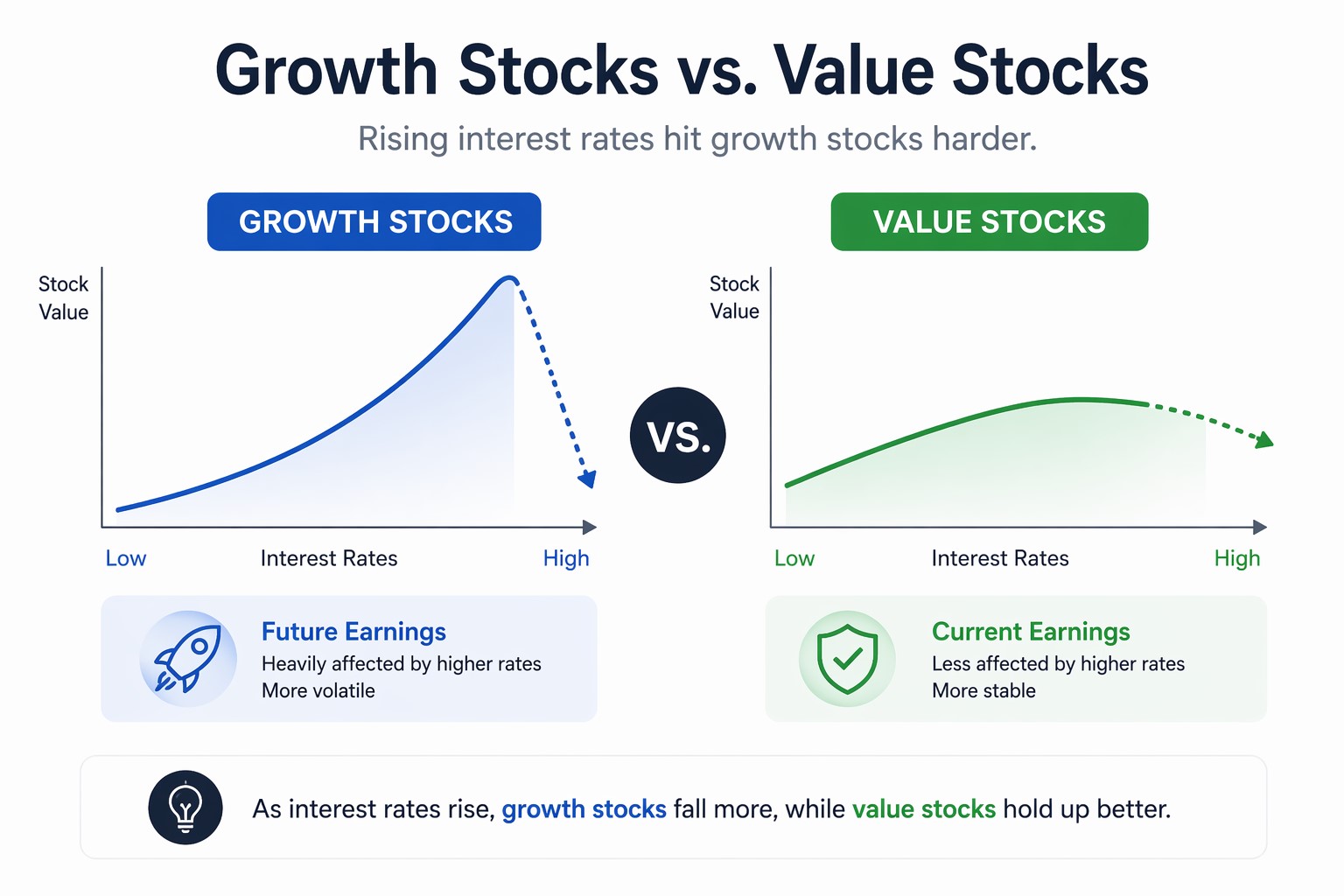
Not all stocks react the same way to rising interest rates.
- Growth stocks (technology, high P/E)
👉 Highly sensitive to rate changes
👉 Often experience larger declines - Value stocks (dividend-paying, stable companies)
👉 More resilient
👉 Less affected by valuation compression
This is why tech-heavy markets often drop more sharply during rate hikes, and this difference is a key reason why growth stocks tend to underperform during periods of rising interest rates.
🧠 What Should Investors Do When Rates Rise?
Understanding this relationship is not just theoretical — it’s practical.
Here are a few strategies investors often consider:
✔ Focus on companies with strong cash flow
✔ Avoid overvalued, speculative stocks
✔ Consider defensive sectors (healthcare, utilities)
✔ Look into dividend-paying or value investments
✔ Stay diversified and avoid emotional decisions
👉 The goal is not to predict the market perfectly
👉 But to adapt to changing conditions
To explore practical strategies, see Best Investments During High Interest Rates.
📌 Final Thoughts
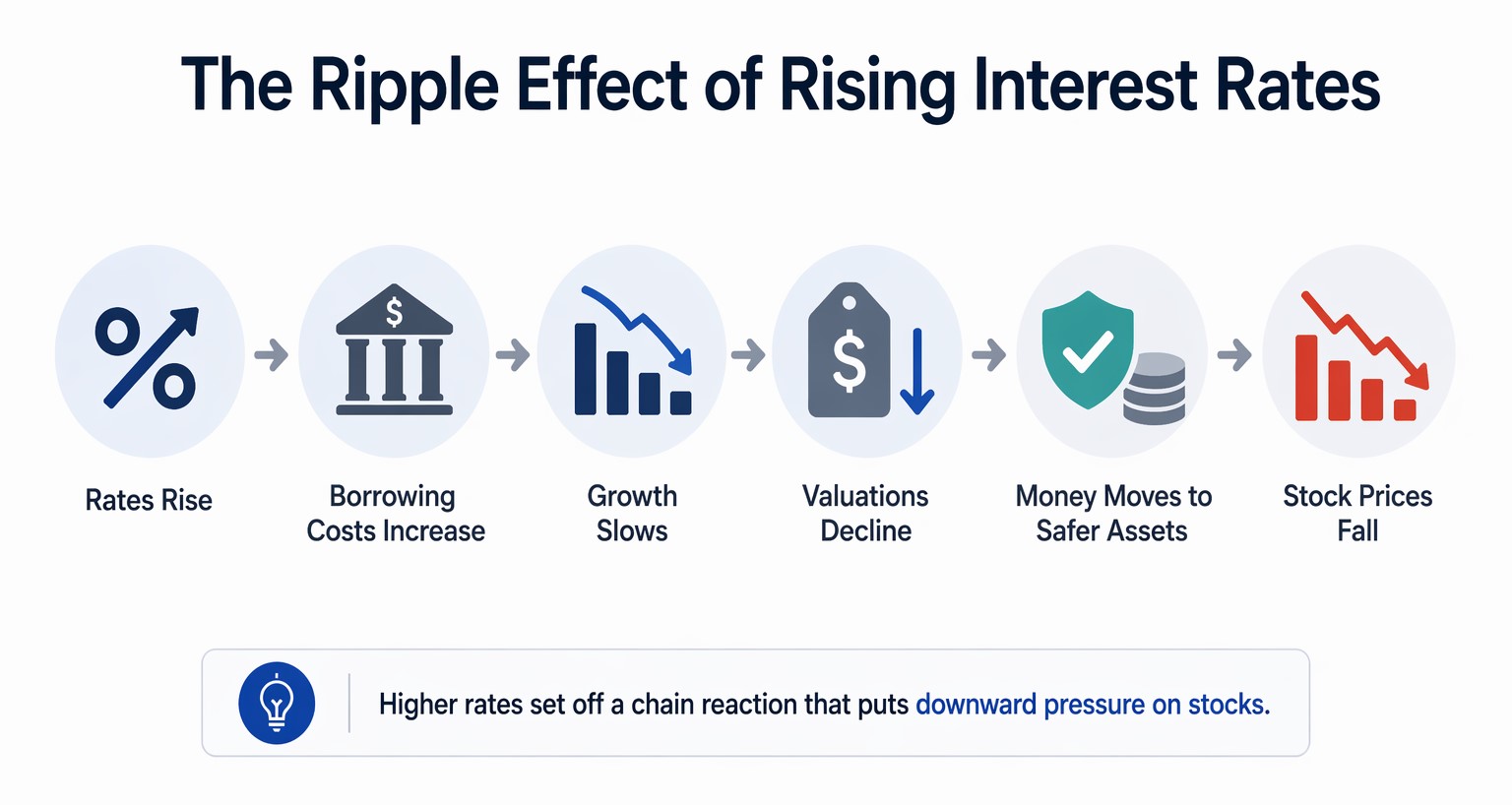
So, why do stocks fall when interest rates rise? The answer lies in higher borrowing costs, reduced spending, and lower valuations.
👉 Stocks fall when interest rates rise because money becomes more expensive, growth slows, and valuations shrink.
If you understand this cycle, you’ll be better prepared — not just to survive market downturns, but to take advantage of them.
Understanding this relationship is essential for navigating different market cycles and making better long-term investment decisions.
❓ FAQ
Q1. Why do stocks fall when interest rates rise?
When interest rates rise, borrowing becomes more expensive for businesses and consumers.
This reduces spending and slows economic growth, which can negatively impact corporate earnings and stock prices.
Q2. Do all stocks fall when interest rates increase?
No, not all stocks react the same way.
–Growth stocks (e.g., tech) tend to fall more due to high valuations
–Value stocks (e.g., dividend-paying companies) are generally more resilient
Q3. Why do higher interest rates reduce stock valuations?
Stocks are valued based on future earnings.
When interest rates rise, those future earnings are discounted more heavily, making them less valuable today.
Q4. Are bonds a better investment when interest rates rise?
Higher interest rates often make bonds more attractive because they offer better yields.
As a result, some investors shift money from stocks to bonds, putting pressure on stock prices.
Q5. Will stocks always go down during a rate hike cycle?
Not necessarily.
If rate hikes are already priced in,
👉 the market may stabilize or even rise despite higher rates.
Q6. Do stocks go up when interest rates fall?
Generally, lower interest rates are positive for stocks.
However, if rates are cut due to a weak economy, the market may remain volatile.
🔍 Related Articles
To better understand this topic, it helps to explore related concepts such as:
📊 Market Fundamentals
📈 Trading Basics
⚠️ Disclaimer: This article is for educational purposes only and should not be considered financial advice. Please conduct your own research before making any investment decisions.